

How to select a thermal-magnetic breaker for your panelboard
Ampere rating, poles, interrupting capacity, trip curve and coordination with the conductor: the five criteria for selecting a breaker on 120/240 V systems.
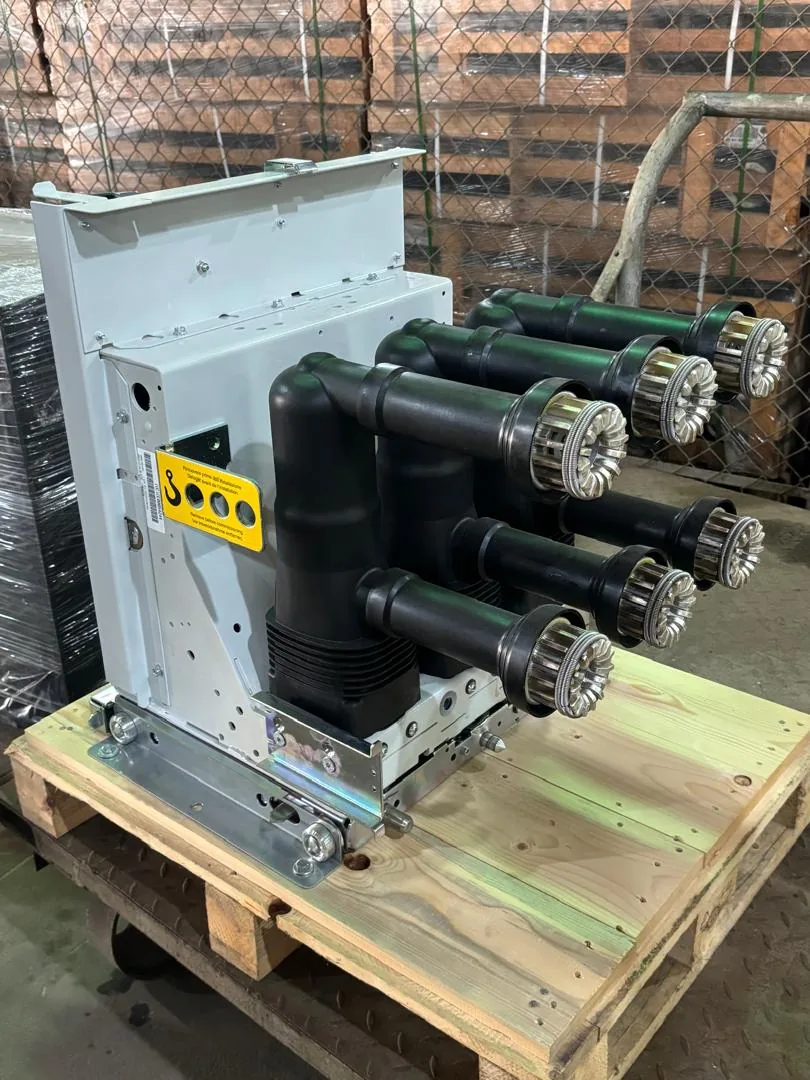
A thermal-magnetic breaker is selected according to the conductor it protects, not the load it feeds. The rated current of the breaker must be equal to or lower than the ampacity of the cable; the number of poles depends on the circuit voltage; the interrupting capacity must exceed the short-circuit level at the point of installation. In Venezuela, where residential and commercial networks operate at 120/240 V, that selection is resolved with the THQL and THQC series in most panelboards.
What is a thermal-magnetic breaker?
A thermal-magnetic breaker is an automatic circuit breaker that opens the circuit through two independent mechanisms: a thermal element (bimetal) that responds to sustained overloads, and a magnetic element (coil) that responds instantaneously to short circuits. The first protects the conductor from slow heating; the second, from the massive current of a fault.
The five parameters that define the selection
1. Rated current (ampere rating)
It is determined from the conductor gauge. The practical rule for 120/240 V installations is that a 14 AWG copper conductor is protected at 15 A, a 12 AWG at 20 A and a 10 AWG at 30 A, applying the temperature and bundling correction factors required by the project. For larger feeders (40, 50 or 60 A) the gauge increases accordingly. The breaker must never exceed the capacity of the cable.
2. Number of poles
- 1 pole: 120 V circuits (lighting, general receptacles).
- 2 poles: 240 V circuits (air conditioning, water heater, electric range, dryer) and feeders for single-phase subpanels.
- 3 poles: three-phase loads in commercial premises and light industry (208 V or 240 V three-phase depending on the system).
3. Interrupting capacity (kA)
This is the maximum short-circuit current the breaker can interrupt safely. The THQL and THQC series offer 10 kA at 120/240 V, sufficient for the vast majority of residential and commercial installations fed from distribution transformers. If the installation is very close to a high-capacity transformer, or if the short-circuit study indicates a higher value, a series with greater capacity such as Record Plus, rated 50 kA, is required.
4. Trip curve
It describes how many times the rated current the magnetic element tolerates before tripping instantaneously. For lighting and receptacles, the standard curve of the residential series works well. For motors, pumps and compressors with high starting current, the curve should be reviewed to avoid tripping at every start.
5. Panelboard type and mounting
THQL and THQC breakers plug into a THQ bus; they are mounted in TLM, NLAB and NAB panelboards. Before purchasing, verify that the panelboard accepts that family and that spaces are available. Details on each type are in our products guide.
THQL or THQC?
The THQL series is the residential line: 1 and 2 poles, from 20 to 60 A. The THQC series is the commercial line: 2 and 3 poles, from 20 to 100 A. Both share the same voltage (120/240 V) and interrupting capacity (10 kA). The choice depends on whether you need three poles or more than 60 A; if not, THQL covers the requirement.
| Typical application | Series | Poles | Range |
|---|---|---|---|
| Home, flush-mounted panel | THQL | 1 and 2 | 20 – 60 A |
| Commercial premises, office, light industry | THQC | 2 and 3 | 20 – 100 A |
| High short-circuit level | Record Plus | 1, 2 and 3 | 12 – 125 A |
Common mistakes when selecting breakers
- Choosing the ampere rating by the load rather than by the conductor.
- Using two single-pole breakers instead of one two-pole breaker for a 240 V circuit.
- Ignoring the short-circuit level of the installation.
- Installing a breaker from another family that "fits" the bus but is not designed for that panelboard.
- Purchasing product without SENCAMER approval or verifiable markings, whose behavior under fault is unknown.
Coordination with the conductor and with the main breaker
In a well-designed panelboard, each branch-circuit breaker trips before the main breaker when a fault occurs on its circuit. That selectivity is achieved by staggering rated currents and trip curves. In commercial installations with several subpanels, the protection coordination study is part of the project engineering and prevents a fault at a receptacle from taking the entire building out of service.
If you are unsure which part number corresponds to your panelboard, send us a photo of the panelboard and the details of the load to be protected on WhatsApp. We will indicate the exact part number and confirm availability in Maracaibo and San Francisco.
QUESTIONS ON THIS TOPIC
Which breaker do I need for a 240 V air conditioner?
A two-pole breaker with common trip, with the rated current indicated on the equipment nameplate and not exceeding the capacity of the installed conductor. In most residential cases a 2-pole THQL is the right choice.
What does 10 kA mean on a breaker?
It is the interrupting capacity: the maximum short-circuit current the breaker can open safely. The THQL and THQC series are rated 10 kA at 120/240 V.
What is the difference between THQL and THQC?
THQL is the residential series with 1 and 2 poles up to 60 A. THQC is the commercial series with 2 and 3 poles up to 100 A. Both are rated 120/240 V and 10 kA.
RELATED ARTICLES
GE to ABB breaker cross-reference: replacement guide
Technical guide to replacing a discontinued GE breaker with its ABB equivalent: poles, rated current, kA, voltage, mounting and trip curve, checked one by one.
Read article →
ABB molded-case breakers: A2A series vs XT family (XT5N–XT7S)
When to use an A2A breaker up to 250 A and when to move to the XT family up to 1600 A: TMF, TMA and Ekip trip units, terminals and mounting explained.
Read article →
NLAB, NAB, CCB and TLM panelboards: differences and uses
What sets TLM, NLAB, NAB and CCB panelboards apart: the type of breaker they accept, typical currents and where each one belongs in the installation.
Read article →