

GE to ABB breaker cross-reference: replacement guide
Technical guide to replacing a discontinued GE breaker with its ABB equivalent: poles, rated current, kA, voltage, mounting and trip curve, checked one by one.
In most cases, a discontinued GE breaker is replaced by the very same part number, manufactured today under the ABB brand. ABB acquired the GE Industrial Solutions low-voltage business, so the THQL, THQC and Record Plus series remain in production with the same code and the same dimensions. When the original part number no longer appears in any catalog, the substitution is made by technical equivalence, and that equivalence must be verified point by point before installation.
Are GE and ABB breakers interchangeable?
Yes, provided they belong to the same series. A THQL2130 marked GE and a THQL2130 marked ABB are the same product: two poles, 30 A, 120/240 V, 10 kA interrupting capacity and plug-in mounting. You do not need to look for a different replacement; you need to look for the same code. The difficulty arises with older part numbers that no longer appear in the catalog, or with molded-case circuit breakers from earlier generations. That is where cross-referencing comes in.
What to verify before replacing a breaker
A correct equivalent satisfies six conditions at the same time. If a single one fails, the breaker may fit physically but will not protect the circuit as it should.
- Number of poles. A 120 V single-phase circuit uses one pole; a 240 V circuit uses two poles with common trip; a three-phase circuit uses three. Never replace a two-pole breaker with two single-pole breakers: if one phase faults, the other would remain energized.
- Rated current. It must match the original breaker, which in turn was selected according to the conductor. Raising the ampere rating "so it stops tripping" leaves the cable unprotected.
- Interrupting capacity (kA). This is the maximum short-circuit current the breaker can interrupt without being destroyed. The THQL and THQC series are rated 10 kA; Record Plus reaches 50 kA. The replacement must have an interrupting capacity equal to or greater than the available short-circuit level at the point of installation.
- Service voltage. A 120/240 V breaker must not be used on 480 V systems. Check the nameplate of the panelboard and of the breaker.
- Mounting type. THQL and THQC breakers are plug-in units on a THQ-type bus. A2A, XT5N, XT6N and XT7S molded-case breakers are bolted to the bus or mounted on a base. A plug-in breaker cannot be adapted to a bolt-on panelboard, or vice versa, without changing the panelboard interior.
- Trip curve. It defines how much overcurrent the breaker tolerates before tripping and for how long. Loads with a high inrush (motors, compressors) require the same curve as the original or an equivalent one; otherwise there will be nuisance tripping or, worse, no trip at all.
Quick cross-reference guide by application
This table summarizes the series we carry and the range each one covers. The complete cross-reference table is available in the corresponding section of the site.
| If the original was | Current series | Range |
|---|---|---|
| Residential plug-in, 1 and 2 poles | THQL | 20 – 60 A |
| Commercial plug-in, 2 and 3 poles | THQC | 20 – 100 A |
| Molded case up to 250 A | A2A | 125 – 250 A |
| Industrial molded case | A2C · A3N · XT5N · XT6N | 250 – 800 A |
| Breaker with electronic trip unit | XT7S Ekip Dip | 1250 – 1600 A |
| High interrupting capacity | Record Plus | 12 – 125 A · 50 kA |
Why is mechanical equivalence not enough?
Mechanical equivalence means the breaker fits the space and the bus of the panelboard. Electrical equivalence means it protects the circuit with the same parameters. A breaker can satisfy the first and not the second. The most frequent field error is installing a breaker with a lower interrupting capacity because "it is the same size": under a bolted short circuit, that breaker does not open and the damage spreads to the entire switchboard.
How to read the breaker nameplate
All the necessary information is printed on the front or the side of the breaker: part number, rated current (In), voltage (Ue or V), interrupting capacity (Icu, IC or kA) and number of poles. On ABB molded-case circuit breakers, the long part number (for example, 1SDA100345R1) uniquely identifies the configuration: frame size, trip unit, poles and terminal type.
Cases where you should consult us
- The original breaker has no legible nameplate.
- The panelboard is from another manufacturer and uses a bus other than THQ.
- The unit is a molded-case circuit breaker with accessories (shunt trip, auxiliary contacts) that also need to be replaced.
- The short-circuit level of the installation changed because the substation or the transformer was upgraded.
In any of these cases, the fastest answer is to send us a photo of the breaker nameplate and of the panelboard on WhatsApp. With that information we confirm the exact part number and its availability.
QUESTIONS ON THIS TOPIC
Is a THQL breaker marked GE the same as one marked ABB?
Yes. ABB acquired the GE Industrial Solutions low-voltage business and keeps the THQL, THQC and Record Plus series with the same code, the same dimensions and the same electrical characteristics.
Can I replace a breaker with a higher-amperage one if it trips too often?
No. The ampere rating protects the conductor, not the load. If it trips frequently, the load, the wiring or the breaker's trip curve must be reviewed; the rated current must never be raised.
What happens if I install a breaker with fewer kA than the original?
Under a short circuit the breaker may fail to open and be destroyed, transferring the fault to the switchboard. The replacement must have an interrupting capacity equal to or greater than the available short-circuit level.
RELATED ARTICLES
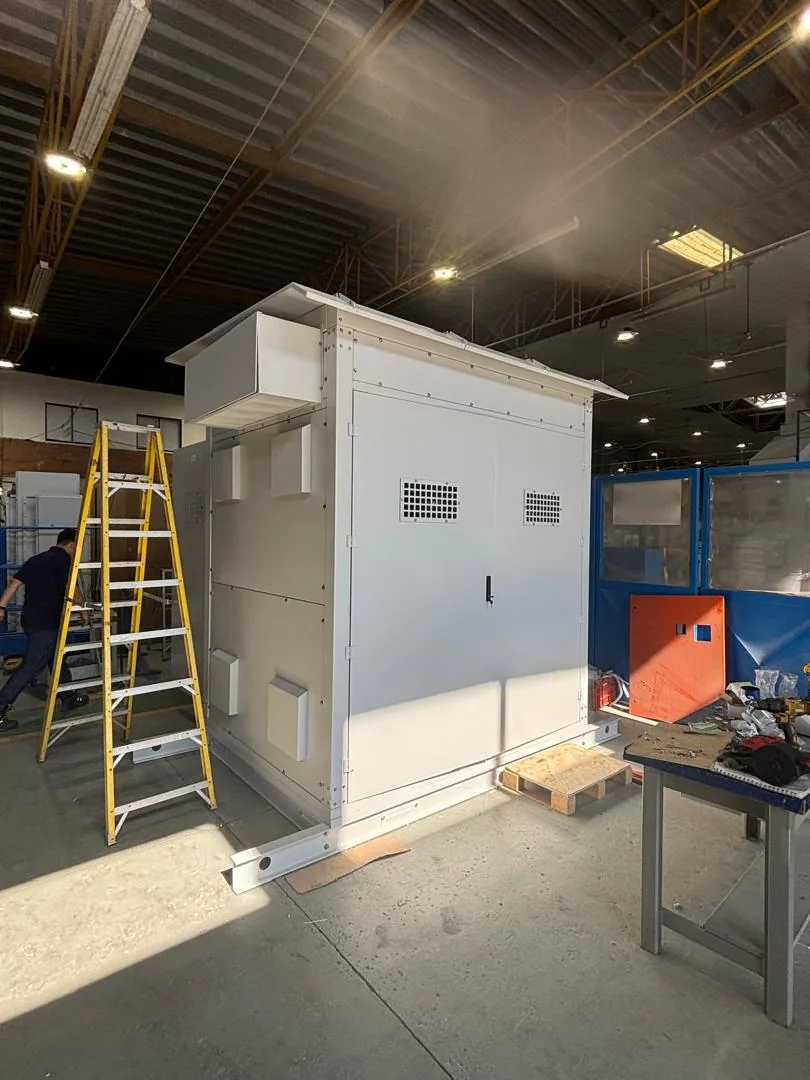
ABB molded-case breakers: A2A series vs XT family (XT5N–XT7S)
When to use an A2A breaker up to 250 A and when to move to the XT family up to 1600 A: TMF, TMA and Ekip trip units, terminals and mounting explained.
Read article →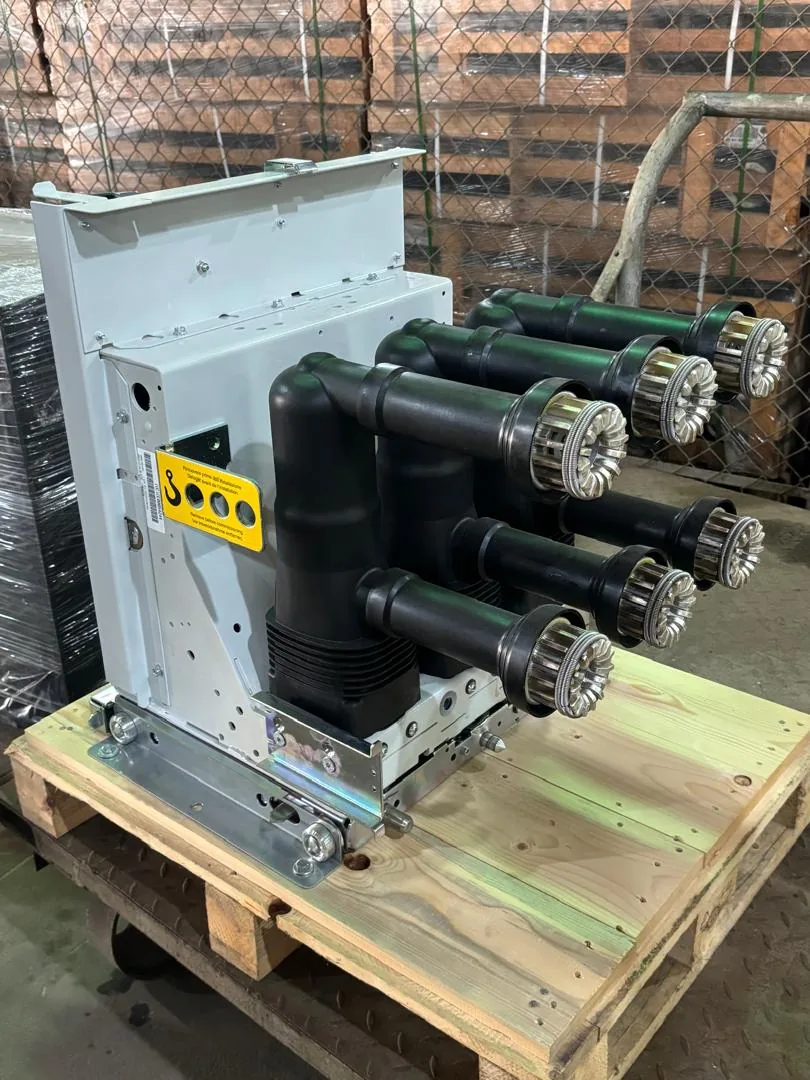
How to select a thermal-magnetic breaker for your panelboard
Ampere rating, poles, interrupting capacity, trip curve and coordination with the conductor: the five criteria for selecting a breaker on 120/240 V systems.
Read article →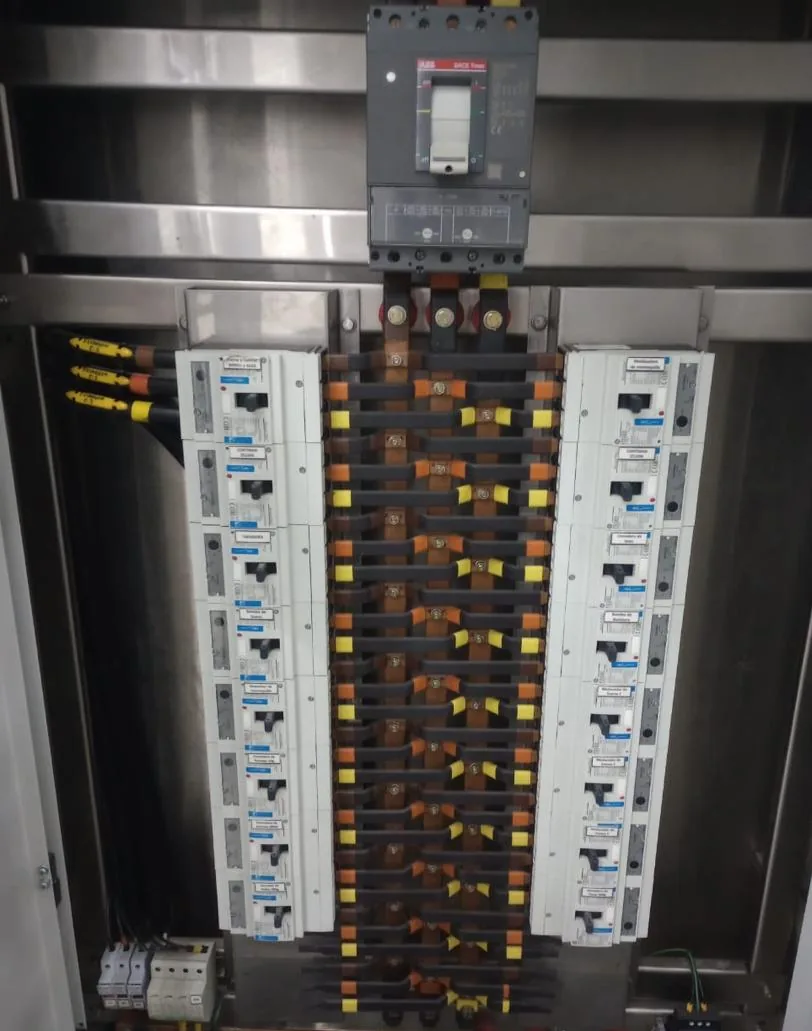
NLAB, NAB, CCB and TLM panelboards: differences and uses
What sets TLM, NLAB, NAB and CCB panelboards apart: the type of breaker they accept, typical currents and where each one belongs in the installation.
Read article →